Irish History, Genealogy and Culture
Below are featured some of the more popular books and articles in this online Irish library and although the contents of the site contain a broad spectrum of historical and legendary material relating to Ireland, family history has proved to be of the greatest interest to visitors, so we begin there:
A Genealogical History of Irish Families
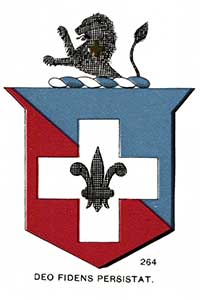
John Rooney's A Genealogical History of Irish Families (1895) has almost 500 entries giving details of family origins, meanings of ancestral names, descriptions of the clan territories, together with associated crests and armorial bearings, and in many cases some background history of the families and famous people associated with them. A number of the lengthier family histories contain images of significant historic events and personalities.
Irish Pedigrees
In Irish Pedigrees; or the Origin and Stem of the Irish Nation John O'Hart traced the lines of descent of approximately 1000 Irish families, in many cases detailing births, deaths and marriages, as well as emigrations to Europe, Australia and America. Irish Pedigrees is a useful resource for cross-referencing with Rooney's A Genealogical History of Irish Families.
Most Irish families are said to be descended from three sons of Milesius — Heremon, Heber, Ir — and his uncle, Ith(e). For quick reference, below are links to the lists of families descended from each and which provide their genealogies from the earliest times:
Yet further information on Irish families and clans can be found in Patrick Woulf's Irish Names and Surnames and more options for genealogical research can be found on our Irish Genealogy page.
Dickens Manuscript on the Irish famine
Library Ireland also publishes historical & literary Irish books under its imprint Books Ulster. Our latest publication The Dickens Manuscript is a novel based on the premise that Charles Dickens wrote a story set during the great famine, which he accidentally left behind on his last tour of Ireland. One hundred years later It turns up at auction and is bought by an English collector. But a powerful rival becomes aware of its existence and will stop at nothing to secure it for his own collection.

“The calamity came upon them gradually, yet swiftly, in the manner of a blanket of dark cloud drifting across the face of the sun until, of a sudden, the vital source of heat and light is obscured in its entirety, and the world beneath is plunged into a chill gloom.”
Order: The Dickens Manuscript
For other of our most popular publications see the books page.
Most popular books on Ireland
Below are some of the more popular books on the site.
Ancient Legends and Superstitions of Ireland
Selected pages
Book contents
Ancient Legends, Mystic Charms and Superstitions of Ireland »
A Topograhical Dictionary of Ireland
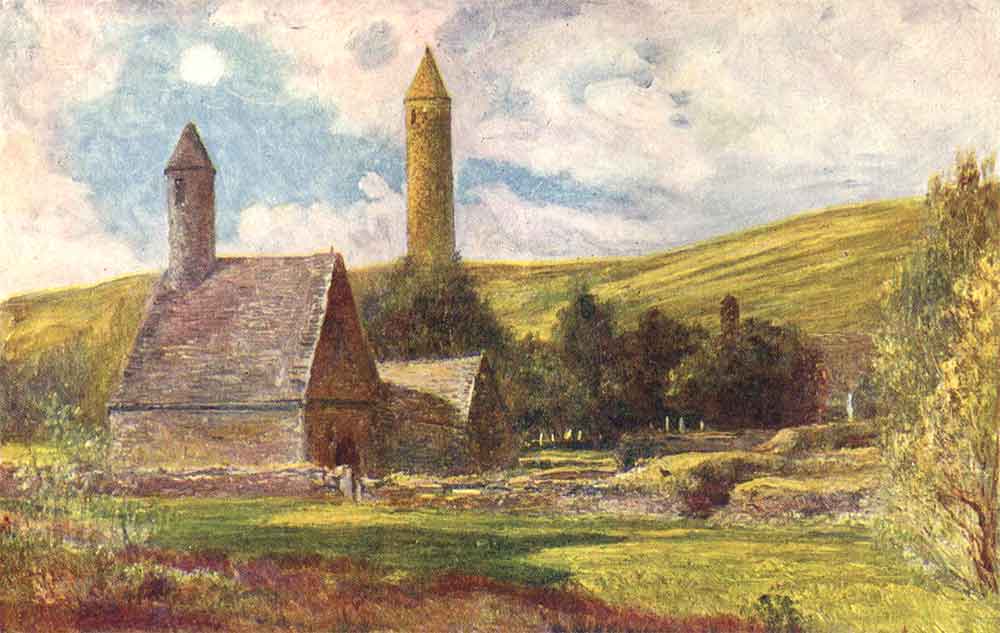
“A Topograhical Dictionary of Ireland comprising the several counties, cities, boroughs, corporate, market, and post towns, parishes, and villages, with historical and statistical descriptions.” (1837)
A monumental work by Samuel Lewis that provides fascinating and invaluable topographical and historical information on all the villages, towns, cities, parishes, etc. of Ireland.
Book contents
Irish Names and Surnames
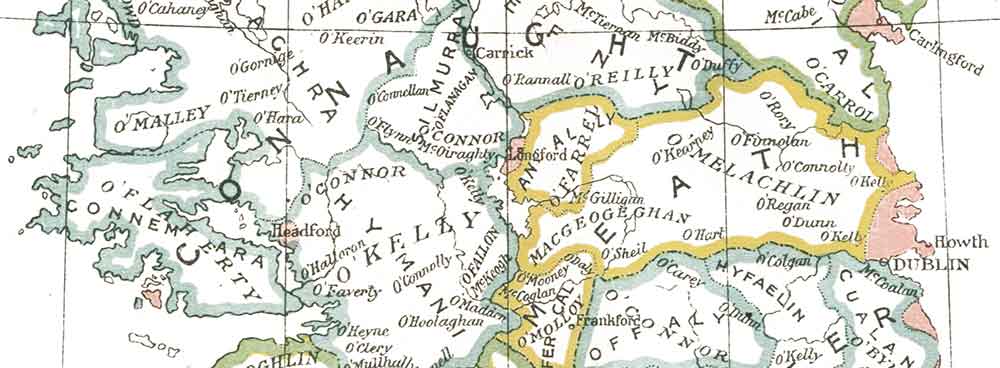
Rev. Patrick Woulfe's book provides the origins and meanings of 1000s of Irish forenames and surnames as well as details on the clans of Ireland.
Book contents
Irish Local Names Explained
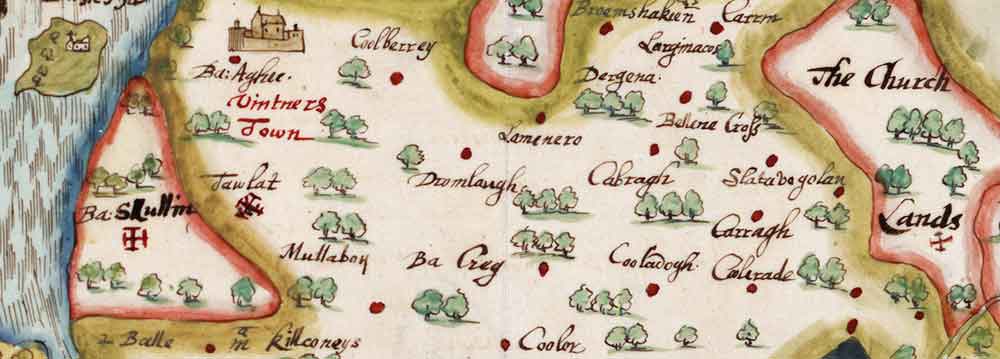
A handy little guide by P. W. Joyce to the meaning of 1000s of Irish place names and the root words from which many of them are formed.
Book contents
Featured reading
Below is a selection of compelling writing on different aspects of Ireland that will amuse, surprise, shock and sadden.
The first on offer is by an American widow, Asenath Nicholson, who gives a very revealing description of the living conditions inside a peasant cottage just prior to the Great Famine in a section from her book Ireland’s Welcome to the Stranger—Cabin Life.
The second, from Asenath Nicholson’s Irish sequel Annals of the Famine in Ireland, graphically details a visit to the island of Arranmore (off the west coast of County Donegal) during the height of the great hunger—Mr. Griffith and a visit to the island of Arranmore.
From the Dublin Penny Journal we have an article on the origin of the Irish funeral cry that includes a description of the author’s first encounter with it—The Irish Funeral Cry (the Ullaloo, Keeners and Keening at Irish Funerals)
In the Ulster Journal of Archaeology we find the mind-blowing suggestion that people from a certain region in Africa were able to speak and understand Irish!—Is the Irish Language spoken in Africa?
From Michael J. F. McCarthy’s Five Years in Ireland, 1895-1900, comes the horrendous story of the murder of a peasant woman in Tipperary as the result of her husband’s belief in fairies and witches—Bridget Cleary burned to death.
Lady Wilde conjures up a few rather gruesome prospects when she tells of—Superstitions concerning the dead.
Ireland travel readings: Discover things to do in Ireland and the many Celtic symbols designed by the Celts.
Latest additions
Provides details of more than 500 forenames traditionally used in Ireland, giving origins and meanings where possible.
Special Report on Surnames in Ireland
Robert E. Matheson’s Special Report on Surnames in Ireland (1909) provides information on the numerical strength of 1000s of surnames in Ireland as well as indicating the provinces and counties in which they were most prevalent at the close of the nineteenth century.