Anchorites or Hermits
From A Smaller Social History of Ancient Ireland 1906
« previous page | contents | start of chapter | next page »
CHAPTER VI....continued
5. The Third Order: Anchorites or Hermits, and Hermit Communities.
We have records of numerous individual hermits from the time of St. Patrick down, retiring from the world to spend their days in prayer and meditation in lonely places remote from human society. But the desire for eremitical life became very general about the end of the sixth century. Then not only individuals, but whole communities of monks sought a solitary life. The leader of a colony of intended recluses went with his followers to some remote place, in a deep valley surrounded by mountains, forests, and bogs, or on some almost inaccessible little island, where they took up their abode. Each man built a cell for himself: and these cells, with a little church in the midst, all surrounded by a low cashel, rath, or wall, formed an eremitical monastery: a monastic group like those known in the East by the name of "Laura." Each monk passed the greater part of his life in his own cell, holding little or no communication with his fellows, except only at stated times in the clay or night, when all assembled in the church for common worship, or in the refectory for meals. Their food consisted of fruits, nuts, roots, and other vegetables, which they cultivated in a kitchen-garden: and it must often have gone hard with them to support life. The remains of these little monasteries are still to be seen in several parts of Ireland, both on the mainland and on islands: as, for instance, at Gougane Barra lake, the source of the Lee in Cork, where St. Finbarr, patron of Cork, settled with his hermit community in the end of the sixth century; on Inishmurray off the Sligo coast; on Ardoilen, a little ocean rock off the coast of Galway, where a laura was founded by St. Fechin in the seventh century; and on the Great Skellig off the Kerry coast, where there still remains an interesting group of cloghans, i.e. beehive-shaped stone houses.
These hermit communities were the Third Order of Saints, who are very correctly described in the old Catalogue. It is stated that they lasted till the time of the Yellow Plague in 664, which broke up the system of eremitical monasteries; but long after this we find numerous records of individual hermits.
There were nuns and convents in Ireland from the time of St. Patrick, as we know from his "Confession," and from his "Epistle to Coroticus": nevertheless it may almost be said that St. Brigit of Kildare was the founder of the Irish conventual system.
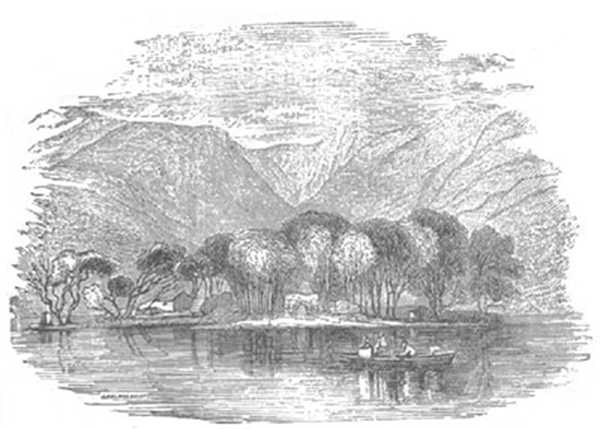
FIG. 41. Present appearance of Gougane Barra on a little island in the lake.