Killarney - Irish Pictures (1888)
From Irish Pictures Drawn with Pen and Pencil (1888) by Richard Lovett
Chapter V: Glengariff, Killarney, and Valentia … continued
« Previous Page | Start of Chapter | Book Contents | Next Page »
Kenmare is nearly on the sea level, and the road soon begins to ascend. It winds along the base of the mountains, rising higher and higher, until it crosses the top of Windy Pass, at an elevation of about 1,000 feet above the sea. It then skirts the slopes high above the Dwenregh River, runs by the northern margin of Looscaunagh Lough, skirts the base of a small mountain, and then affords the traveller what is considered to be, and justly so, the very finest view of the Killarney Lakes in all their variety and extent. From this point, until Killarney is reached, wherever the eye turns it meets fine peaks, waters gleaming in the sunshine, enticing glens that look as if specially created to afford picnic facilities, and the ever-changing expressions of natural beauty which, if not unrivalled, are worthy of the highest praise, and capable of affording very pure pleasure.
And here again it should be noted that Killarney suffers most from its friends. Some of these, not content to allow its claims to rest upon the evidence of a very high type of beauty, clearly manifest to any one capable of judging, make monstrous claims, and give expression to absurd and high-flown descriptions, which only tend to irritate and to provoke comparisons that are better not made at all. Killarney, in the writer's judgment, is quite capable of holding its rank among the districts of exceptional natural beauty; but for its admirers to expect those who visit it to admit that it stands without a rival, can only lead to vexation of spirit.
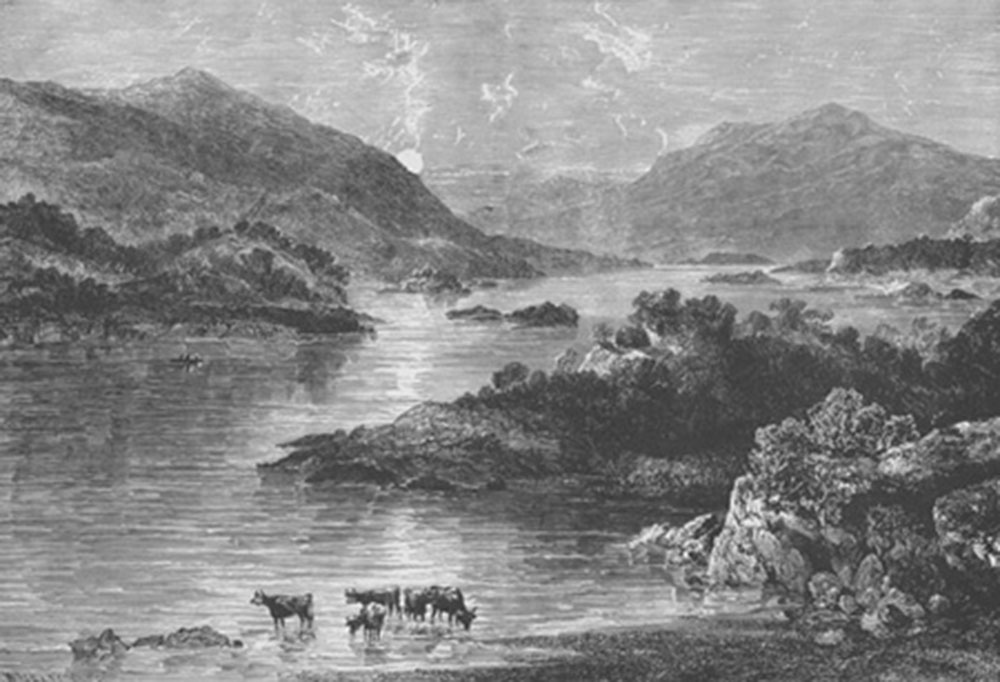
Upper Lake Killarney
Arrived at Killarney, the first task is to see it. At present the arrangements for doing this are not so convenient as they might be. Those who come by the Kenmare Road get a succession of lovely distant views, and those whose purses admit of a sojourn at the Lake or the Royal Victoria Hotels have no reason to complain; but for all others, to get anything like a view of the lakes is a task involving the expenditure of time, exertion, and money. The domain of the Earl of Kenmare lies between Lough Leane and the town, and around this a lofty wall has been constructed, with the result that it prevents any view whatsoever, unless the visitor proceeds to some such recognised point of vantage as Ross Castle. It is the same on the road to Muckross Abbey. In fact, it is possible, or rather, as there is no choice in the matter, it is compulsory, on all who wish to travel the six miles of road between Muckross Abbey and Lake View House, to journey by a road which on one side of the way presents the unvarying monotony of a blank stone wall. The patient endurance of those who thus journey is not strengthened by the recollection that on the other side of the wall are some of the best views in what is considered to be the loveliest region in Ireland. Whether, if these walls were lowered, matters would be better, the experts must decide. It is quite certain, even if the trees on the various estates and the distance from the water prevents any view of the lake or the surrounding mountains, that the mental irritation produced upon all who have to pass along the five or six miles of dead wall would be avoided, without in any way interfering with the rights or security of the fortunate possessors of the northern and eastern shores of Lough Leane, if this could be done.
« Previous Page | Start of Chapter | Book Contents | Next Page »